
ClickGuard
B2B SaaS platform protecting ad spend by detecting and blocking fraudulent clicks across Google, Meta, and Microsoft Ads.
The problem
A 58-page website that confused users, buried value, and lost to a free Google default.
Outcomes
58 → fewer
1× Award
+29%
My role
Made at duall®studio
Lead UX/UI Designer, working with an Art Director, dev team, and directly with the client's CEO and marketing team
Scope
Full rebrand · Website redesign · Information architecture · UX copy · Design system
Methods
Heatmap analysis · Click tracking · A/B testing

Key decisions
Lead with the cost of inaction, not the product's features
For an audience with a free alternative already installed, features aren't the trigger, the cost of not acting is. We restructured the homepage to open with what undetected click fraud actually costs: wasted budget, distorted campaign data, and decisions made on corrupted numbers. ClickGuard enters the page as the answer to a problem the user already feels, not as a pitch they need to evaluate.
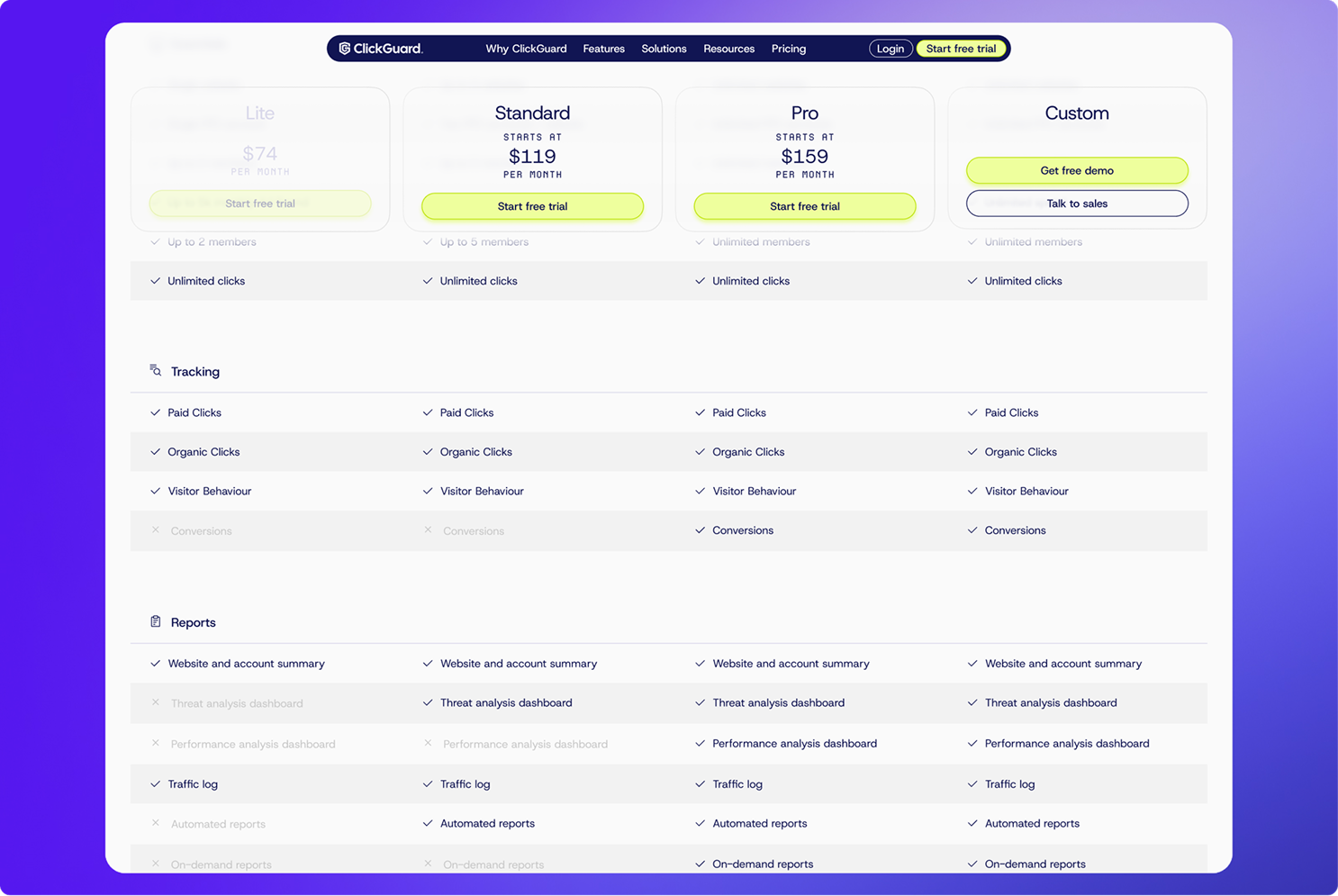
Rebuild the pricing page around the user's decision, not the product taxonomy
The original layout stacked packages vertically, price visible only on the first line, feature comparison requiring the user to scroll hundreds of rows while mentally tracking which column they were in. We moved to a side-by-side table with sticky package name and price, shortened feature descriptions to scannable one-liners, and reduced visual noise. The page now works the way a purchase decision actually works, comparing options at a glance, with context always visible.
Design for scan, write for experts
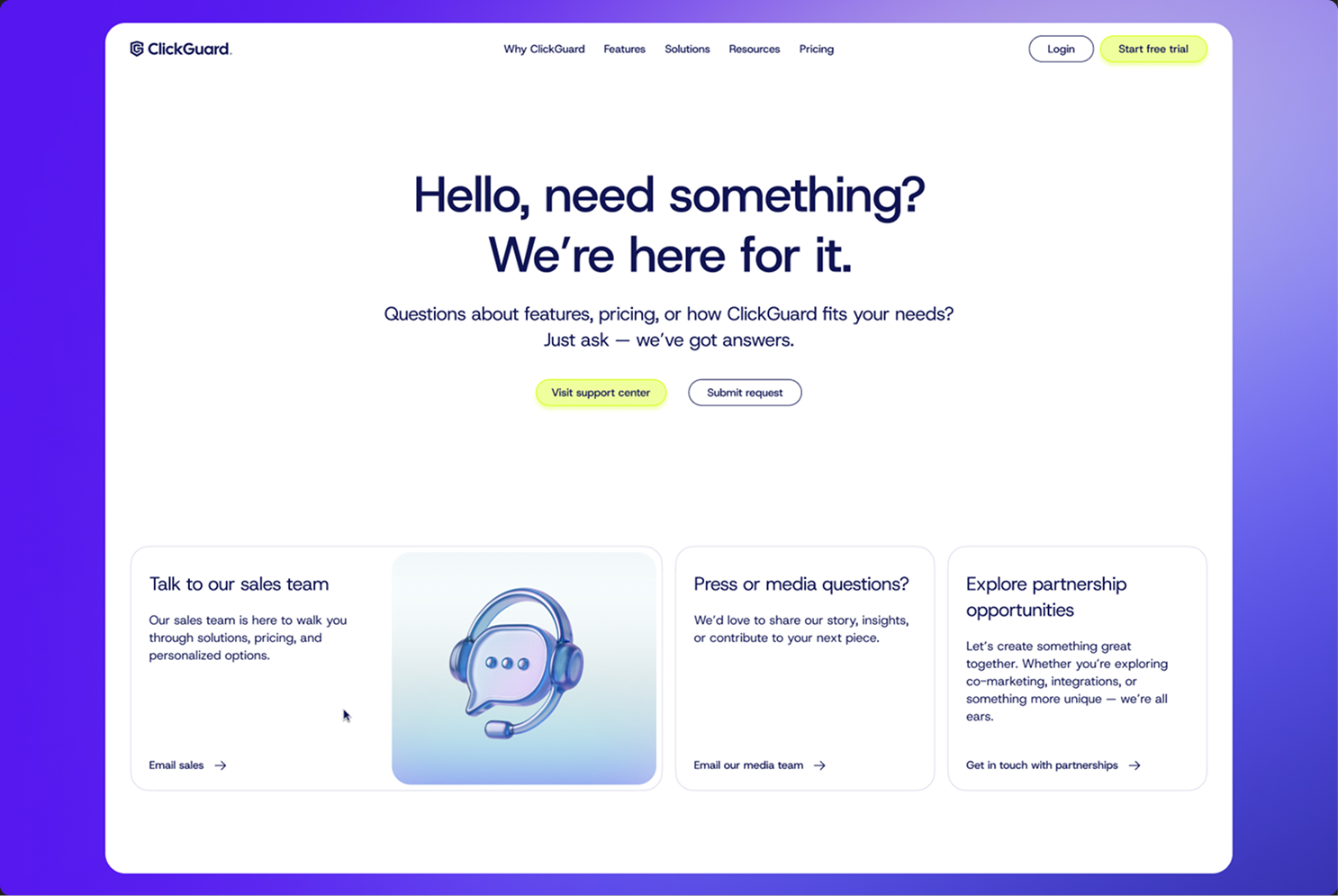
Performance marketers scan pages — they don't read them. The previous site demanded attention before earning it. We rebuilt every key page around scannability: short UX copy, clear section hierarchy, value proposition legible within seconds. We didn't simplify the language — writing to this audience's level was itself a trust signal. A tool that sounds like it understands PPC is more credible to a PPC specialist than one that explains it to them.